

Humane dog-training notes
Kind, practicaldog training.
Reward-based guidance for the everyday moments with your dog — calm, clear, and grounded in welfare.
Every dog is doing their best. Good training just makes the right thing easier — kind, clear, and built on rewards.
No shock collars, no dominance, no miracle fixes. Just practical, source-backed help for the everyday questions — and honest limits on when an article is not enough.
Start where your dog is today.
These pages are useful on their own, but the first three set the safest foundation.
Understand the site limits
What this guide covers, what it does not, and when to seek veterinary or qualified behavior help.
02FoundationLearn the humane approach
Reward-based basics, clear cues, calm routines, and why this site avoids force and punishment.
03Safety firstKnow when an article is not enough
Red flags for pain, sudden change, bite risk, severe fear, panic, or dangerous behavior.
A practical library for everyday moments.
Thirty plain-English, source-backed guides — grouped from foundations to gentle care and grooming.
Foundation & safety
 Scope
ScopeWhat This Site Covers — and Doesn’t
The site’s humane scope, safety limits, and when to seek veterinary or behavior help.
 Principles
Humane Dog-Training Principles
The reward-based basics behind calm routines, clear cues, and safer behavior change.
 Red flags
Dog Behavior Red Flags
Which signs may need a veterinarian, trainer, behavior consultant, or vet behaviorist.
 Pain signs
Signs of Pain That Look Like “Bad Behavior”
Behavior changes that may be pain-related rather than disobedience.
 Sudden change
Sudden Dog Behavior Change
When to pause training-only advice and contact a vet or behavior professional.
 Gut health
Can Your Dog’s Gut Affect Their Behavior?
How digestion and the gut–brain axis can shape mood and behavior — and when it means a vet visit.
Calm routines at home
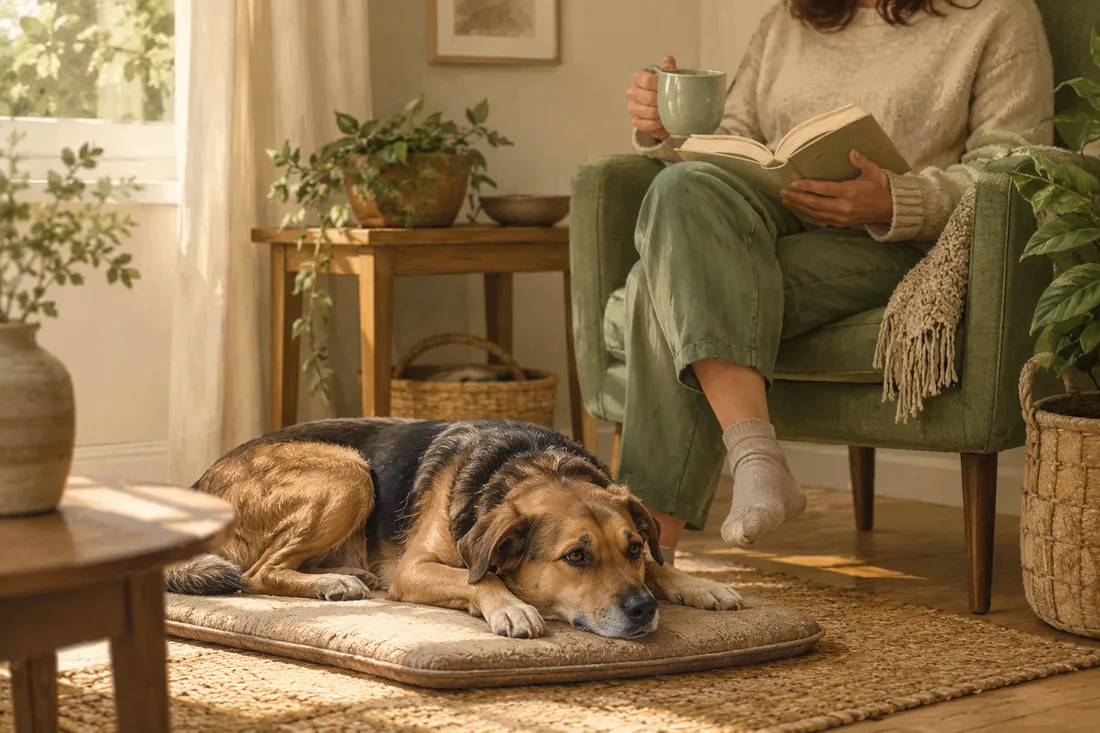 Settle
How to Teach Your Dog to Settle Calmly
A reward-based guide to settling at home, with safety caveats and troubleshooting.
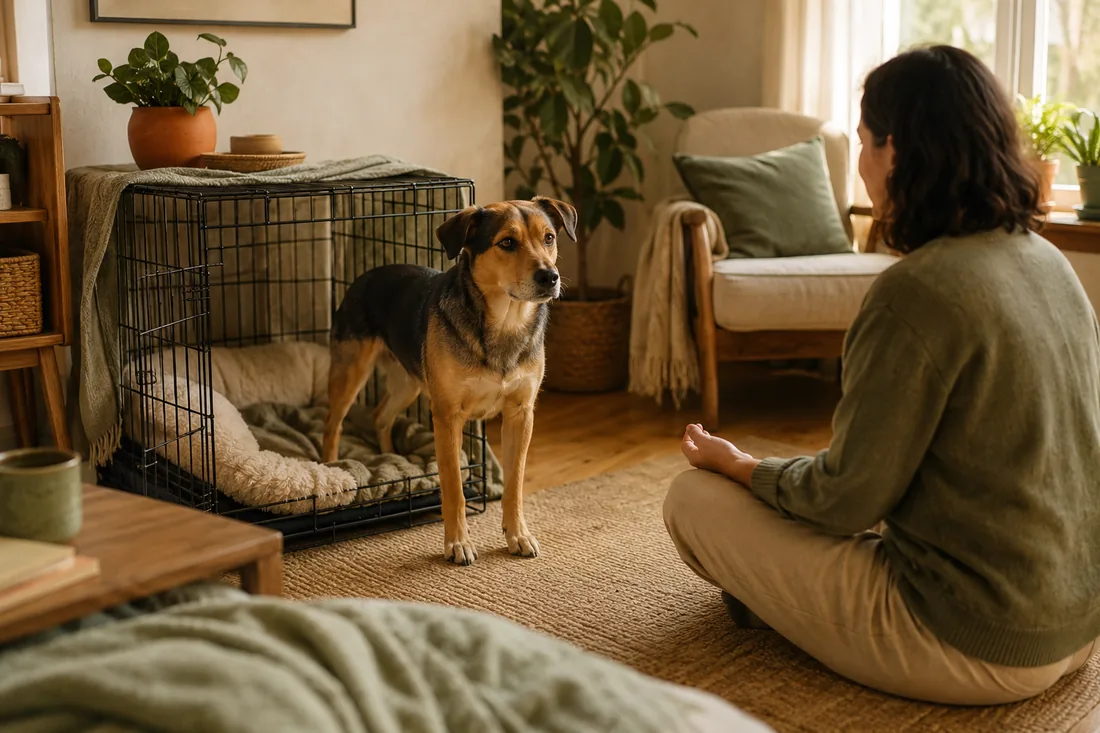 Crate
CratePositive Crate Training: First Steps
A humane introduction to crate training — first steps and when not to use one.
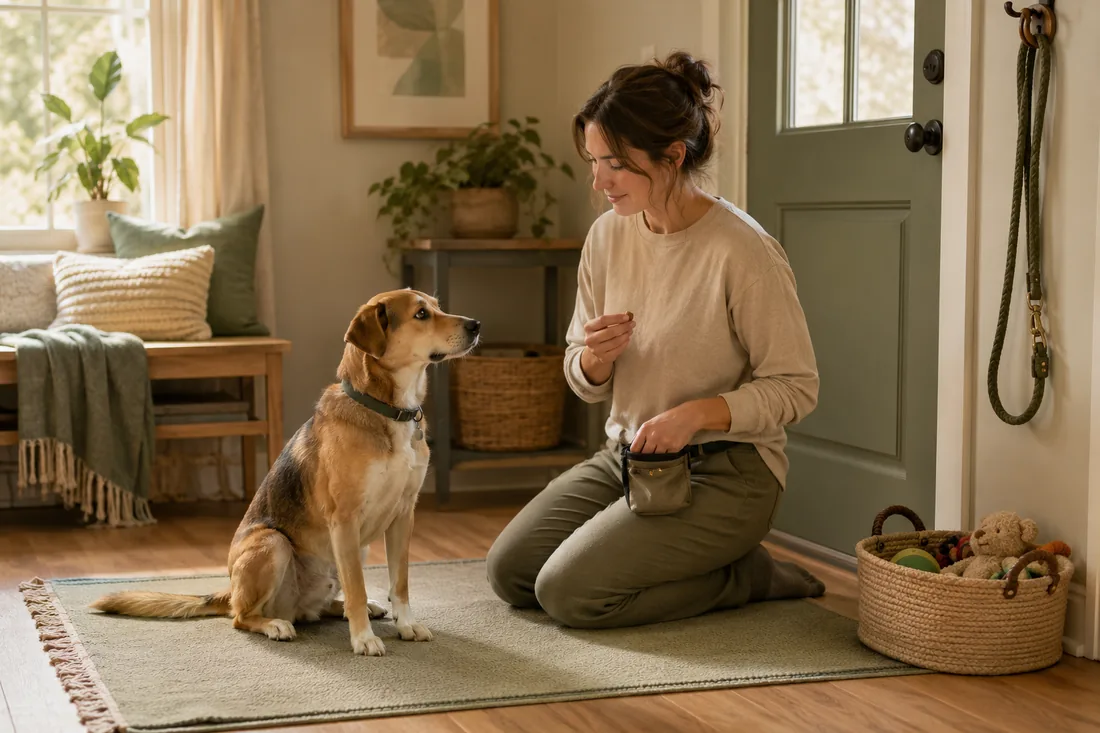 Routine
A Simple Daily Training Routine
A realistic, low-maintenance routine for busy owners using short reward-based practice.
Everyday manners
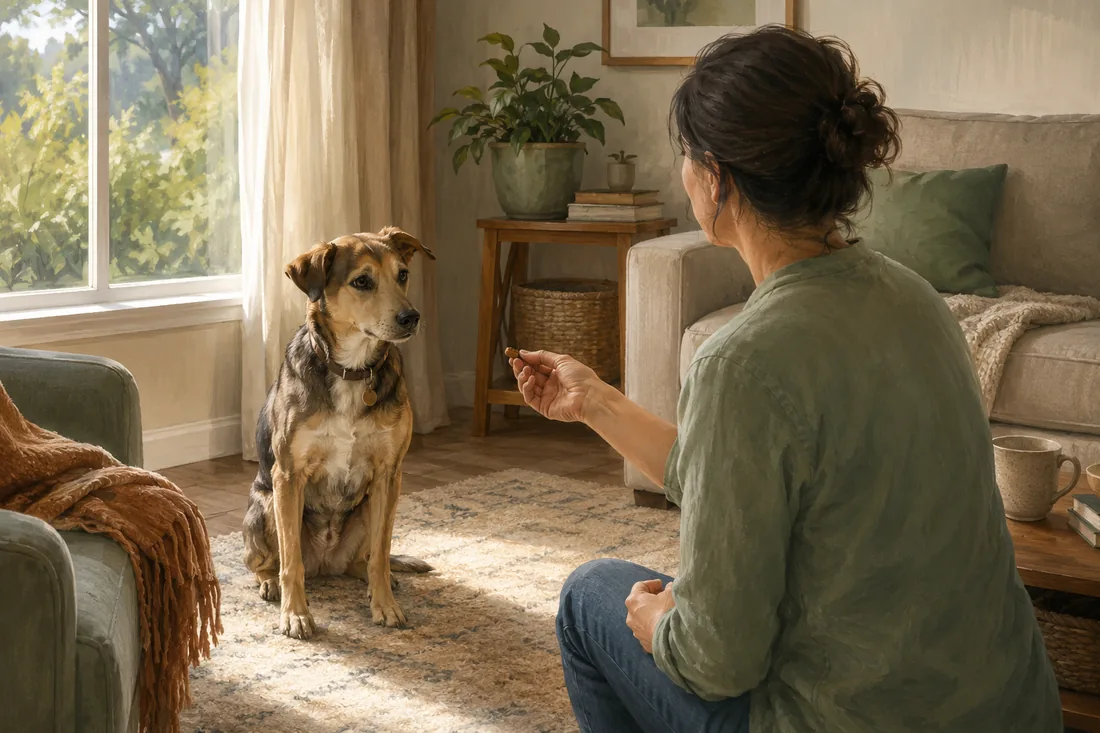 Barking
Barking at Noises, Visitors & Triggers
Understand everyday barking, reduce triggers, and reward calm behavior.
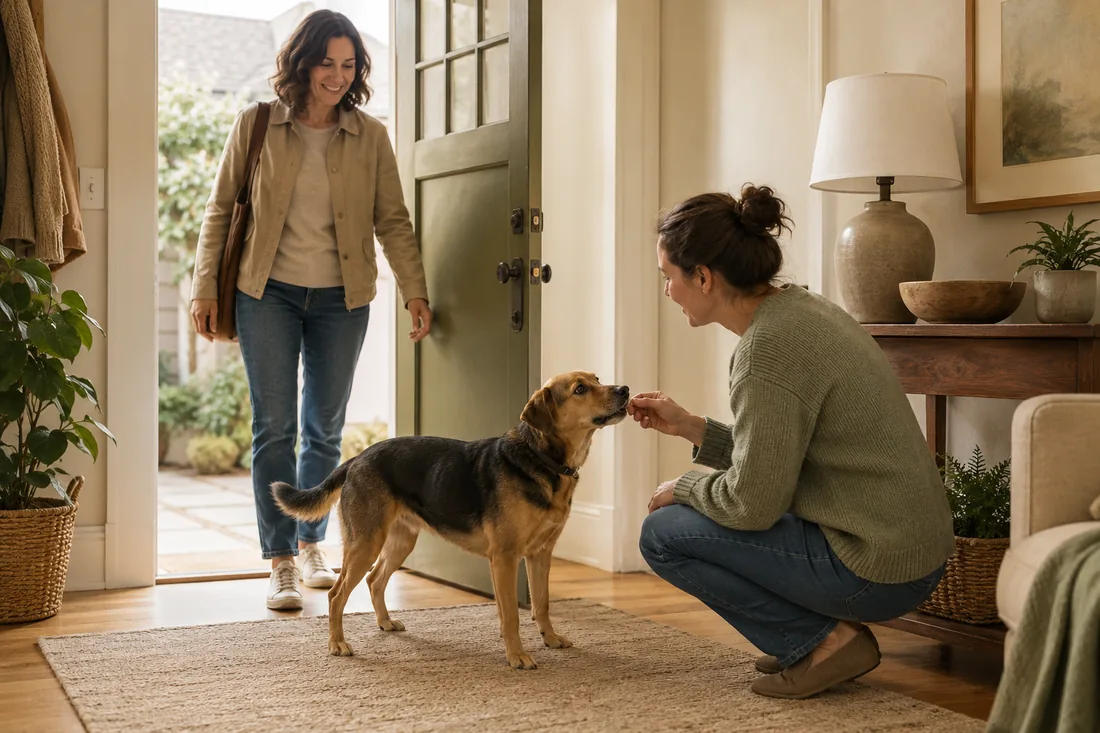 Jumping
Stop a Dog Jumping Up Without Punishment
Reduce ordinary jumping, teach four paws on the floor, and keep visitors safer.
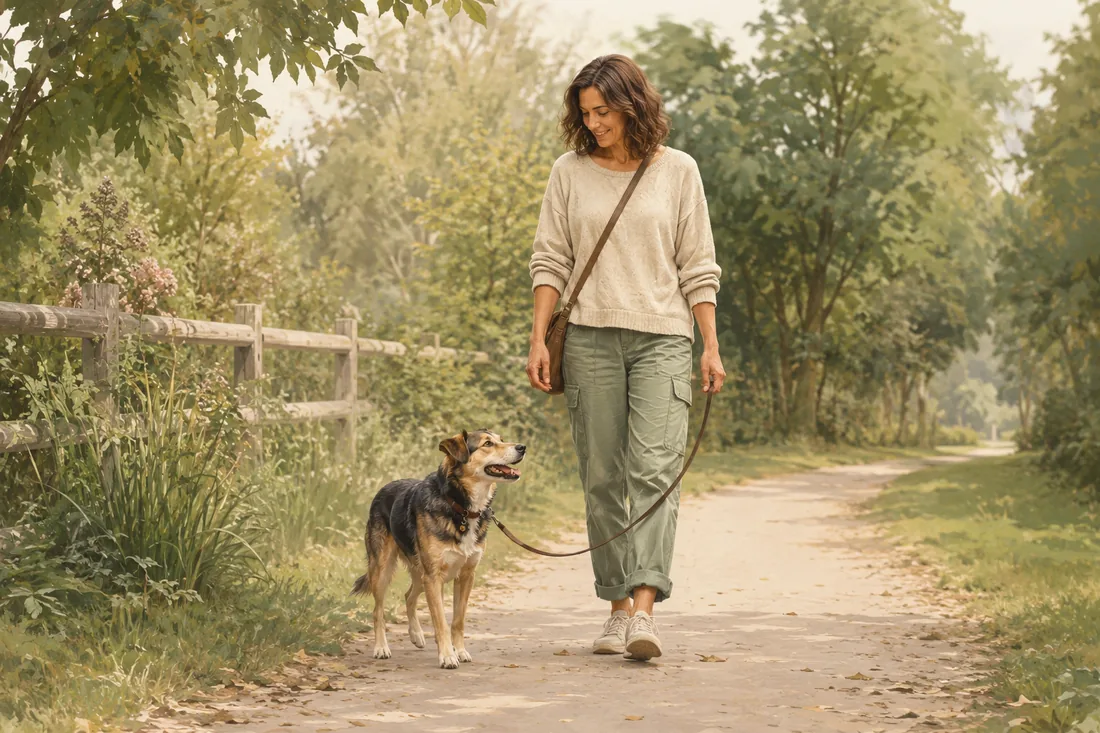 Walking
Loose-Leash Walking, No Corrections
Ordinary loose-leash practice without leash pops, prong collars, or choke chains.
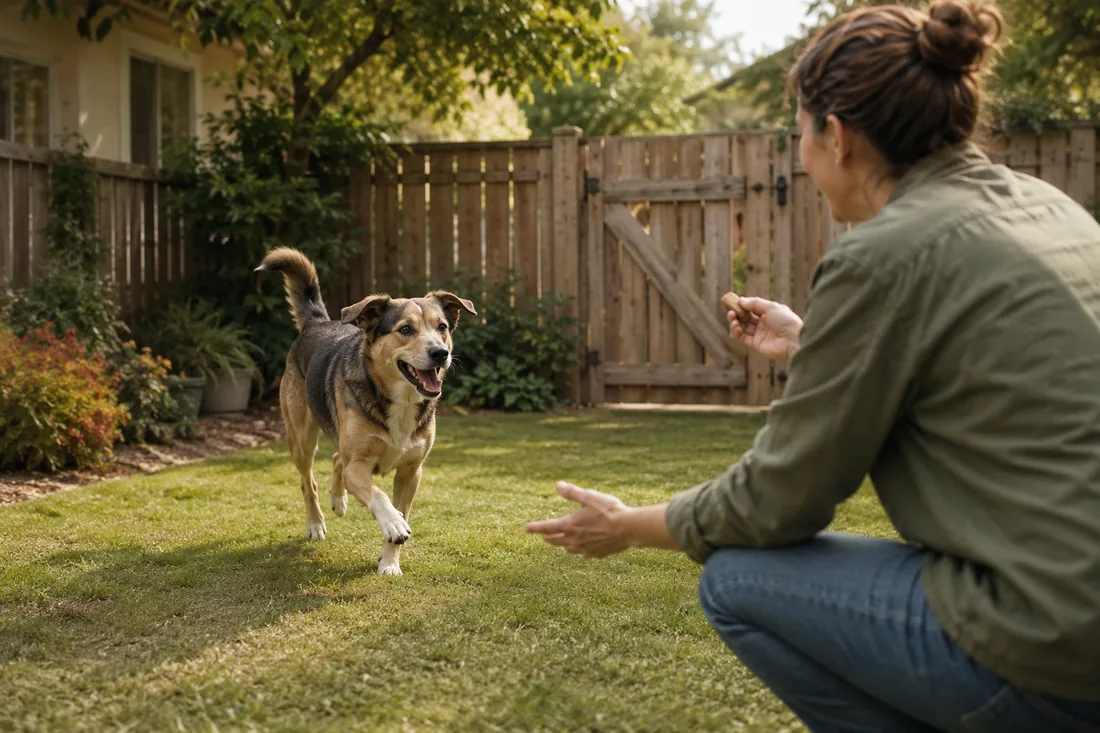 Recall
Simple Recall Practice
A cautious, reward-based guide to recall indoors, in gardens, and safe enclosed areas.
Puppy basics
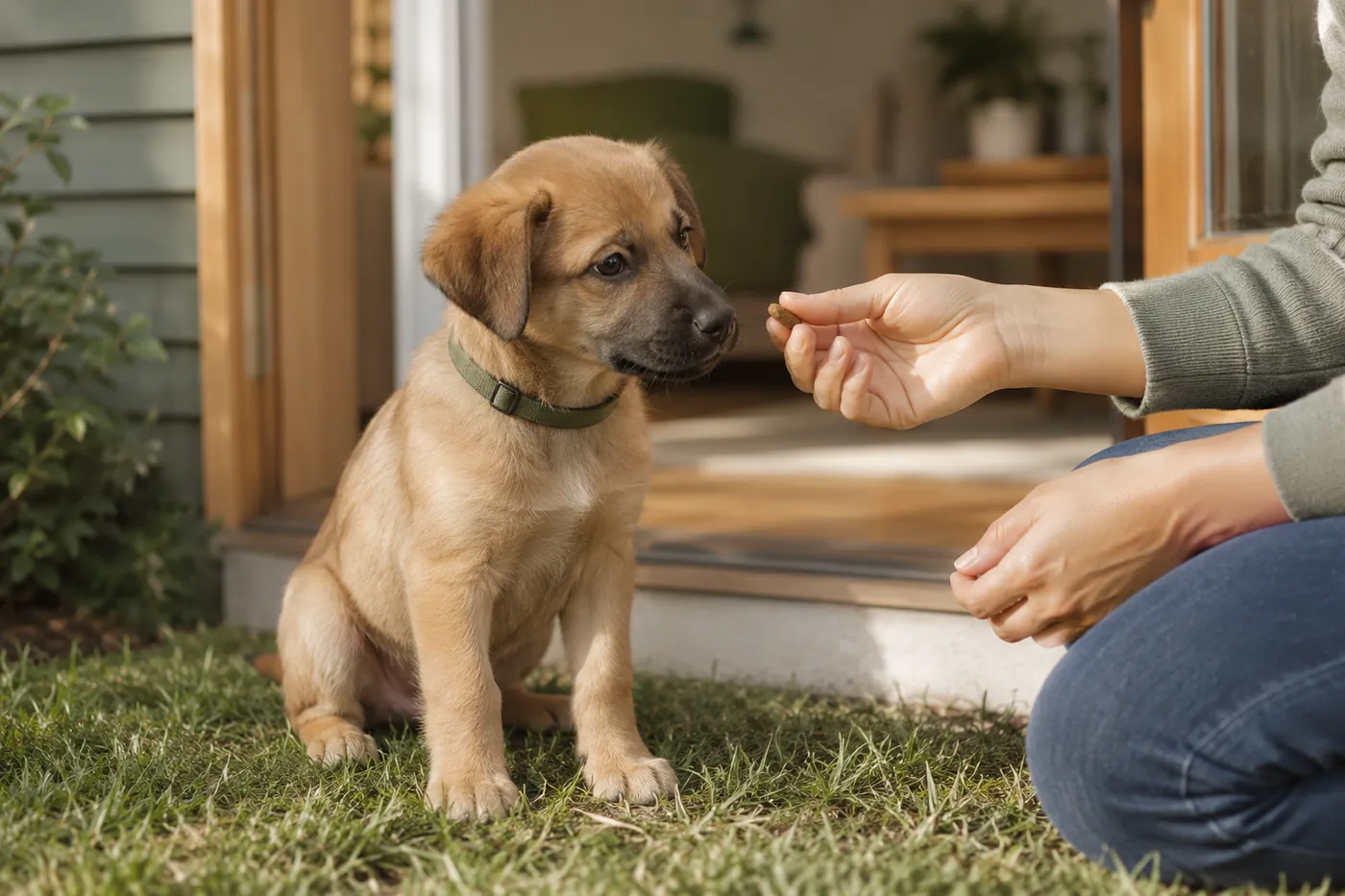 Puppy
PuppyHouse-Train a Puppy Without Punishment
A calm, reward-based potty-training plan — routine, supervision, and praise.
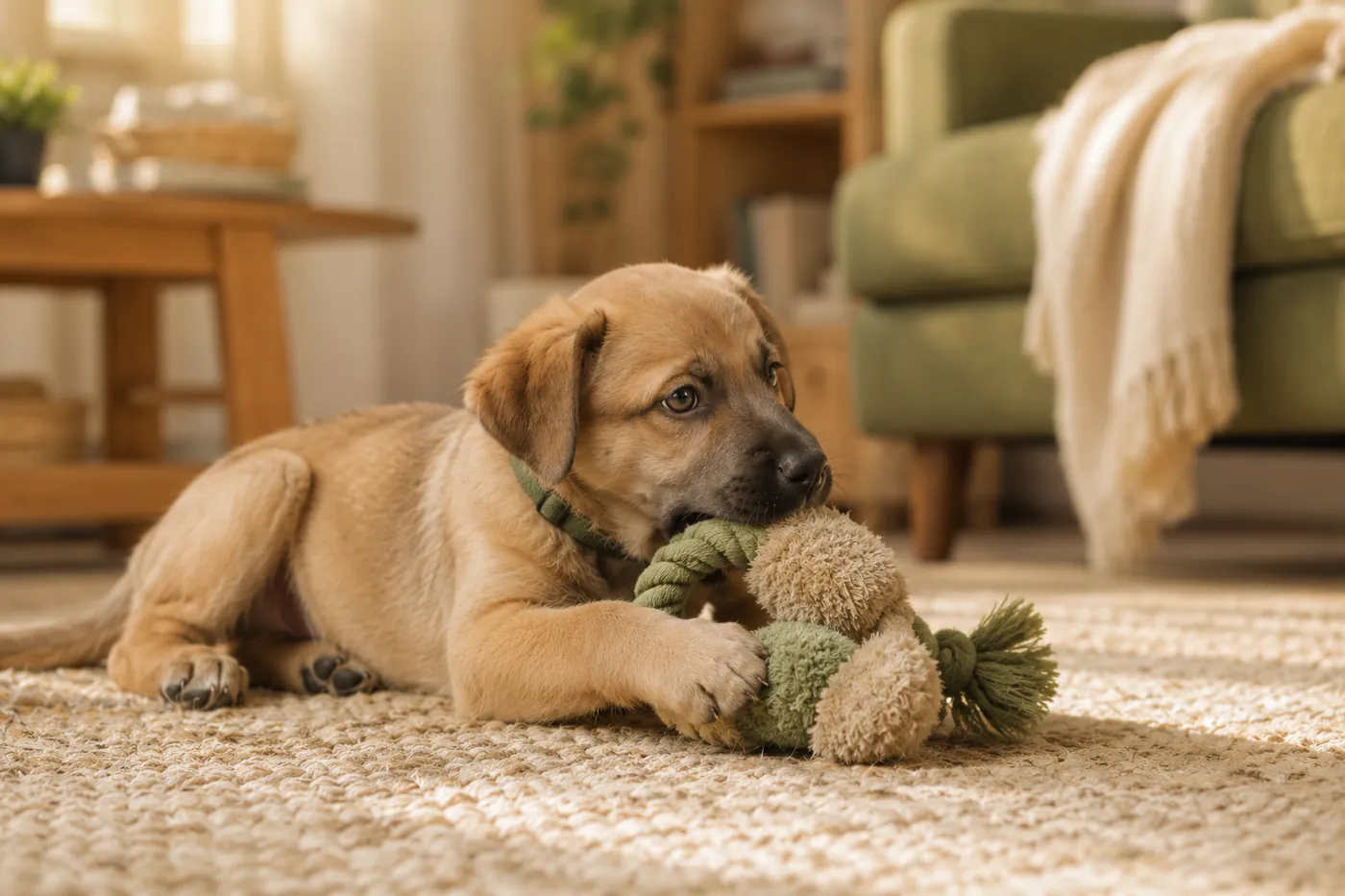 Puppy
PuppyPuppy Biting & Nipping
Reduce normal mouthing with bite inhibition, redirection, and calm management.
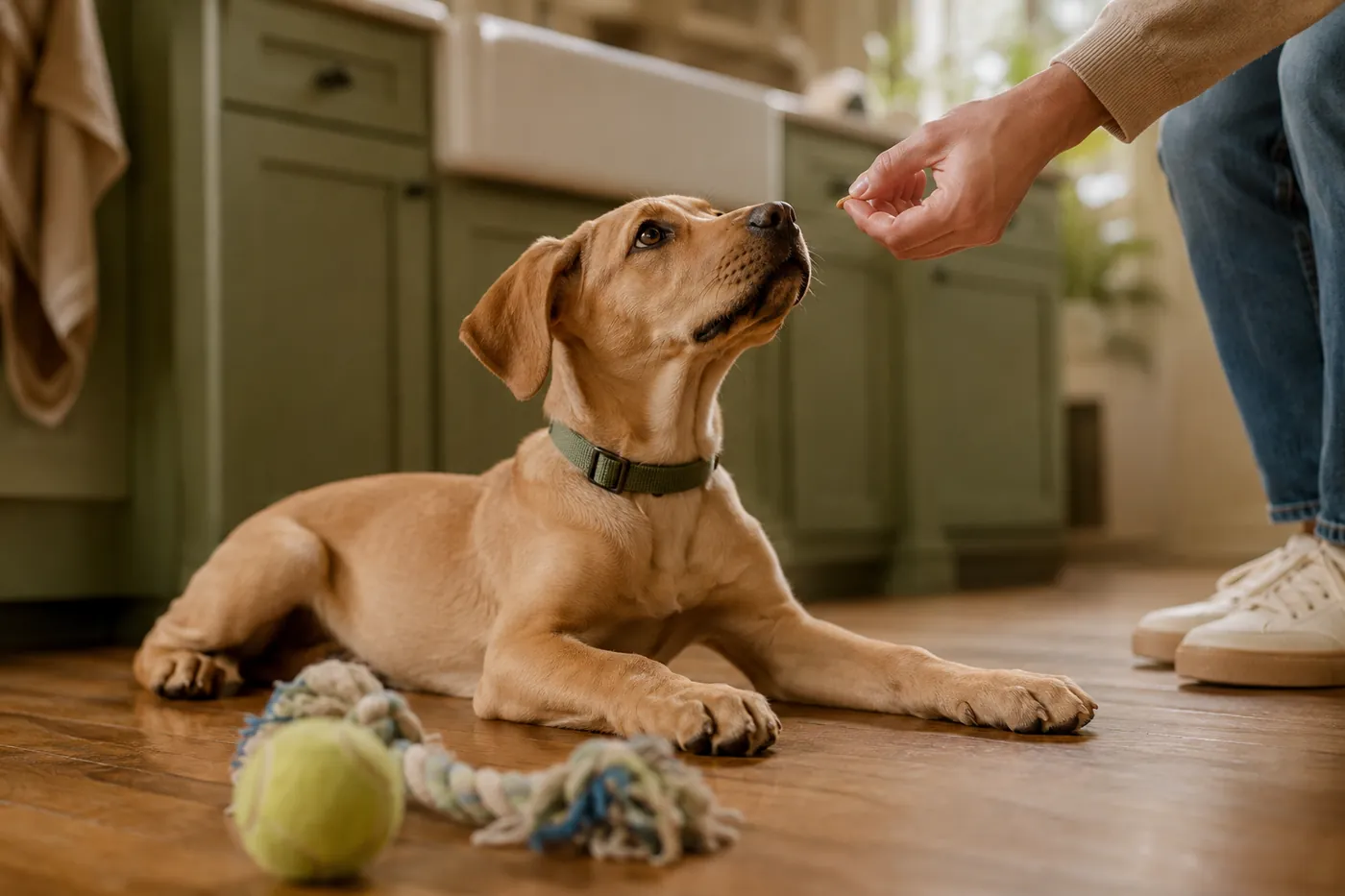 Puppy
PuppyTeach “Leave It” and “Drop It”
Two kind safety cues taught with trades and rewards — no force or guarding.
 Puppy
PuppyPuppy First Cues: Name, Sit, Down
Start the first cues with food lures, good timing, and short, happy sessions.
 Puppy
PuppyHelp a Puppy Settle & Sleep at Night
Realistic expectations and a calm wind-down routine for better nights.
Common challenges
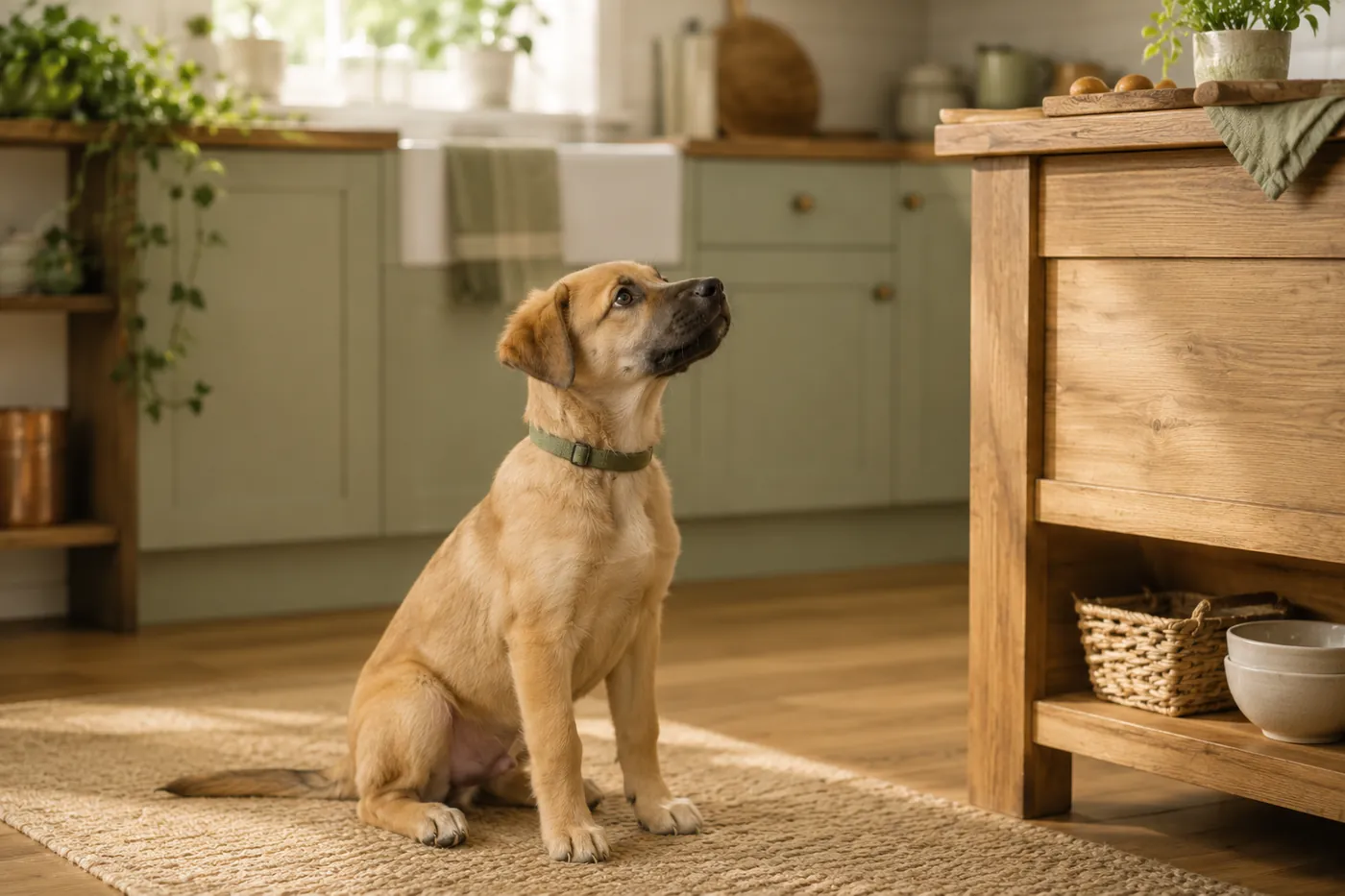 Kitchen
Stop Counter-Surfing Without Punishment
Manage the kitchen and reward calm, four-on-the-floor habits.
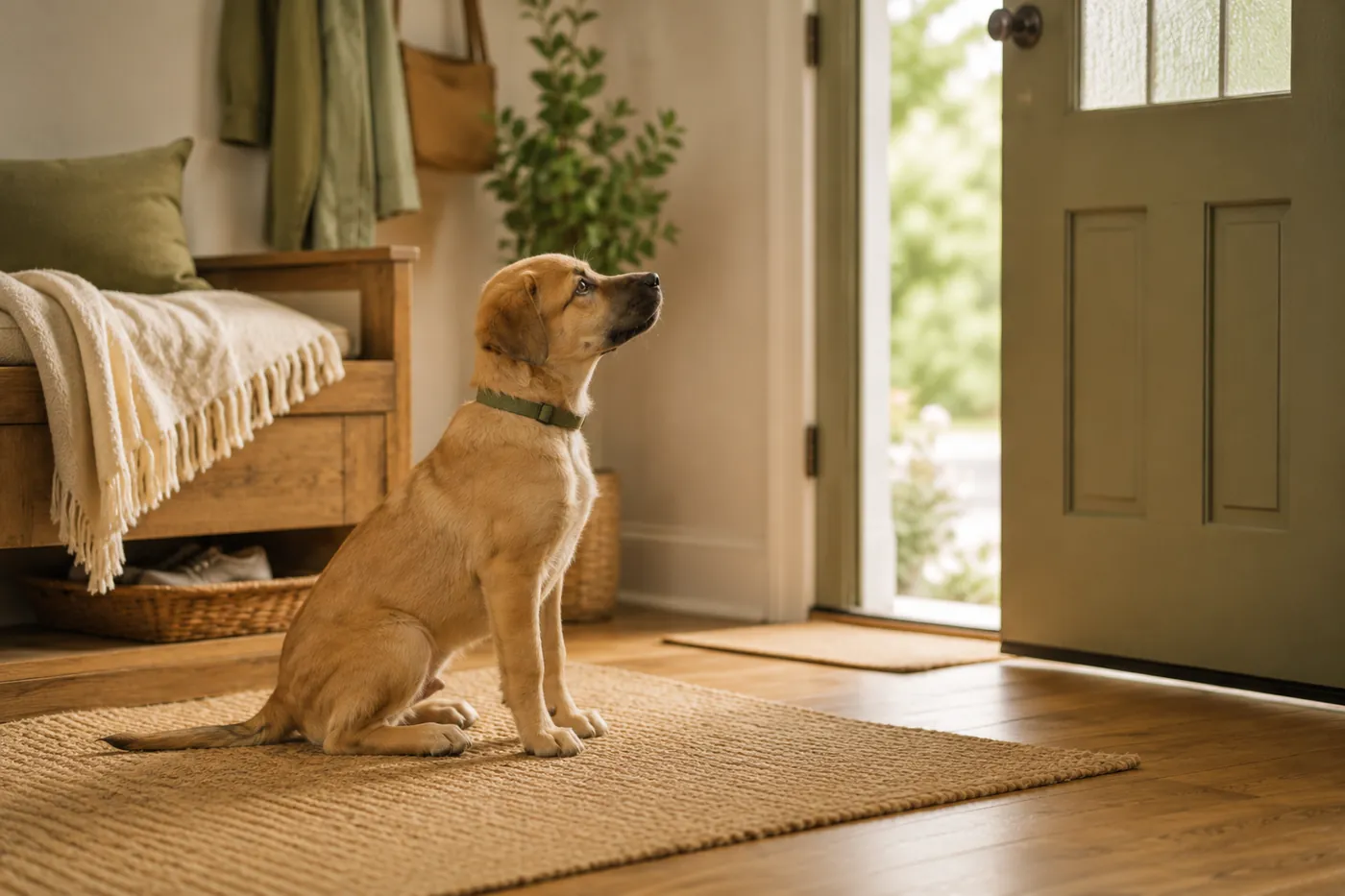 Doors
DoorsStop a Dog Bolting Out the Door
Prevent escapes with management and a calm wait at the threshold.
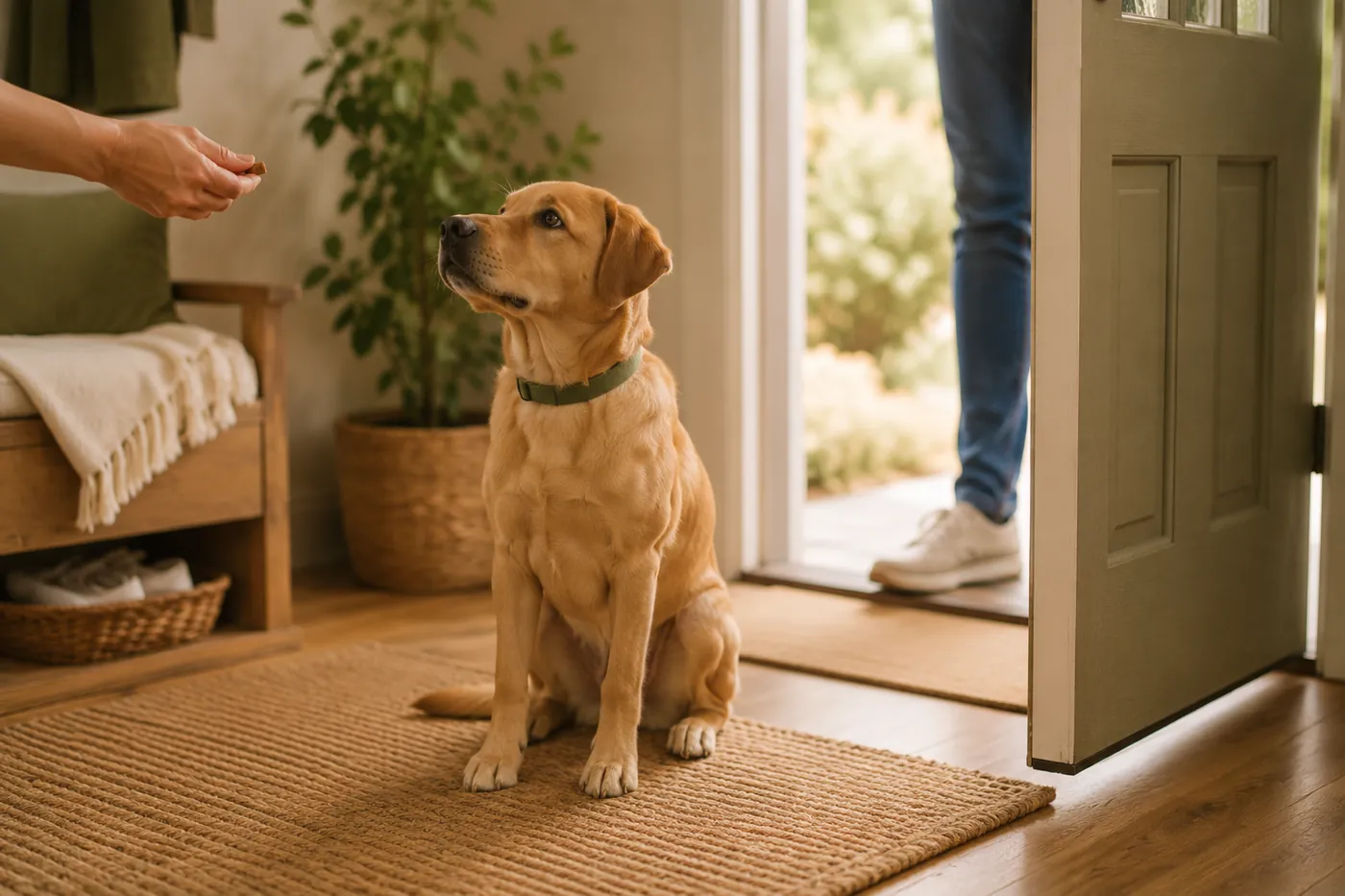 Guests
Greet Guests Politely
Give your dog a job, reward calm, and keep visitors and children safe.
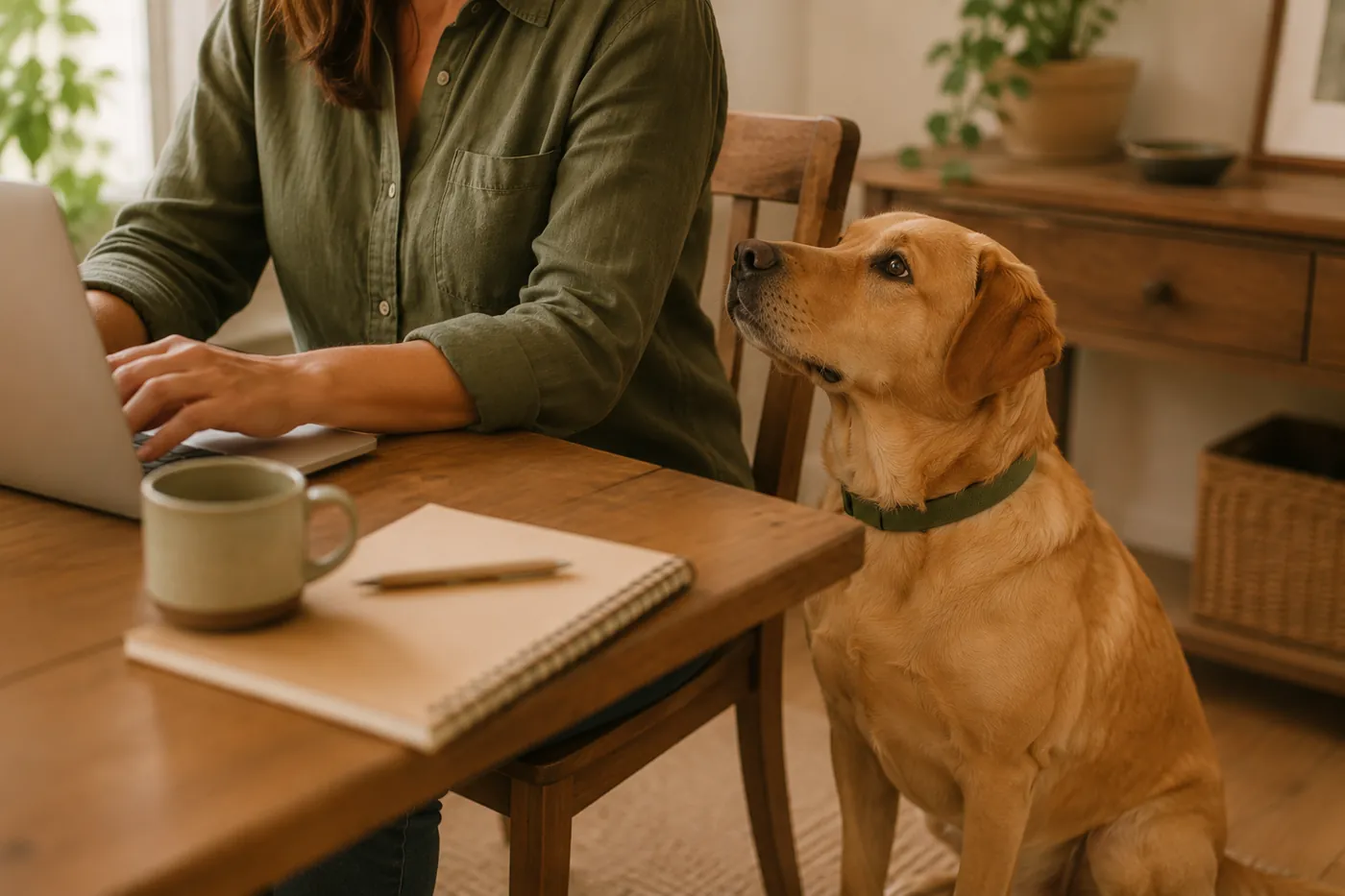 Barking
Reduce Attention-Seeking Barking
Meet your dog’s needs and reward quiet — no punishment or anti-bark devices.
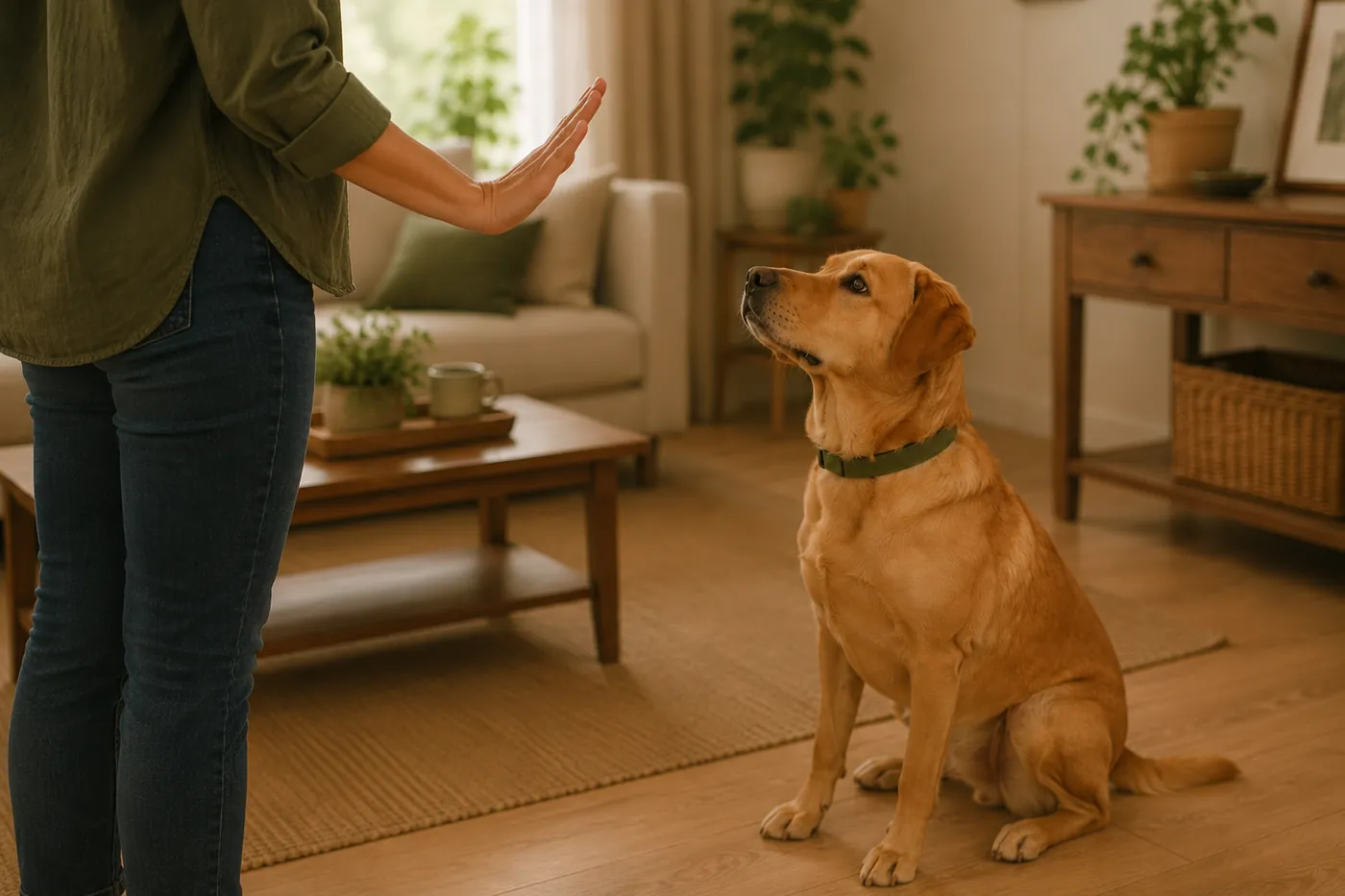 Safety
Teach “Wait” and “Stay”
Build two useful safety cues gradually, with rewards and a clear release.
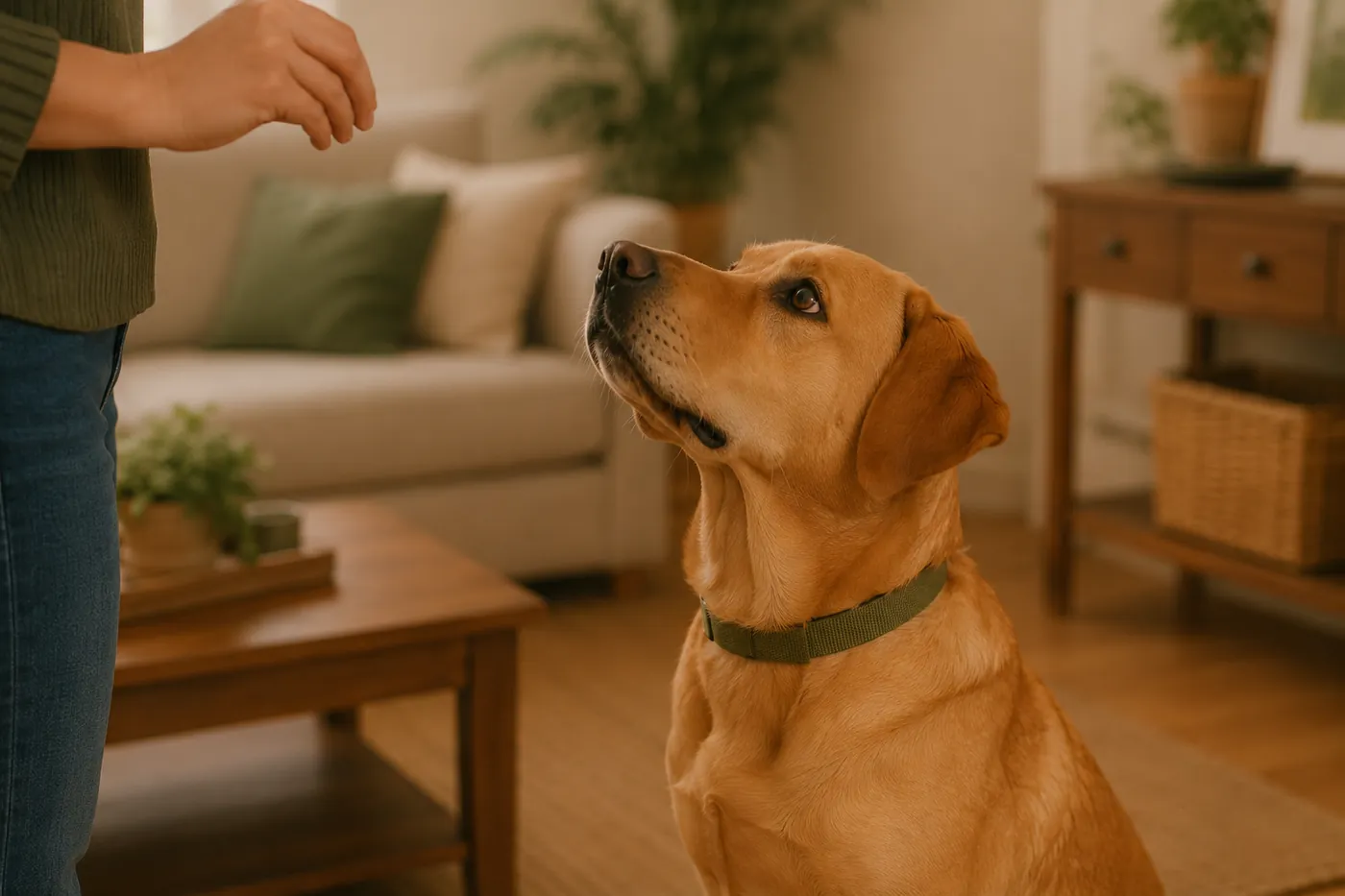 Focus
FocusGet Your Dog to Listen Without Yelling
Build attention and engagement with clear cues and rewards, not volume.
Care & grooming
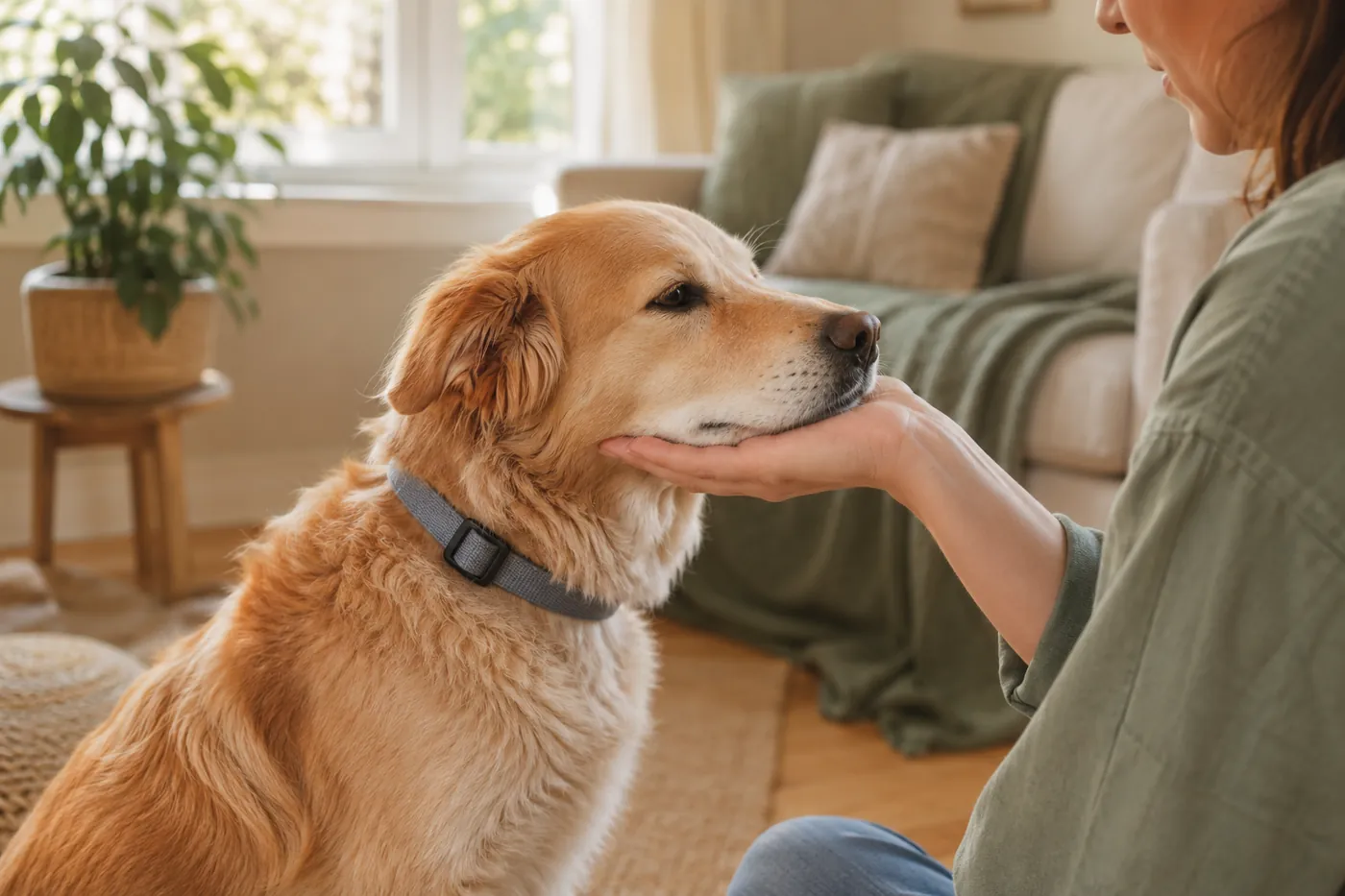 Care
CareCooperative Care: Kind Handling Basics
What cooperative care is, and how letting your dog opt in makes handling and grooming calmer.
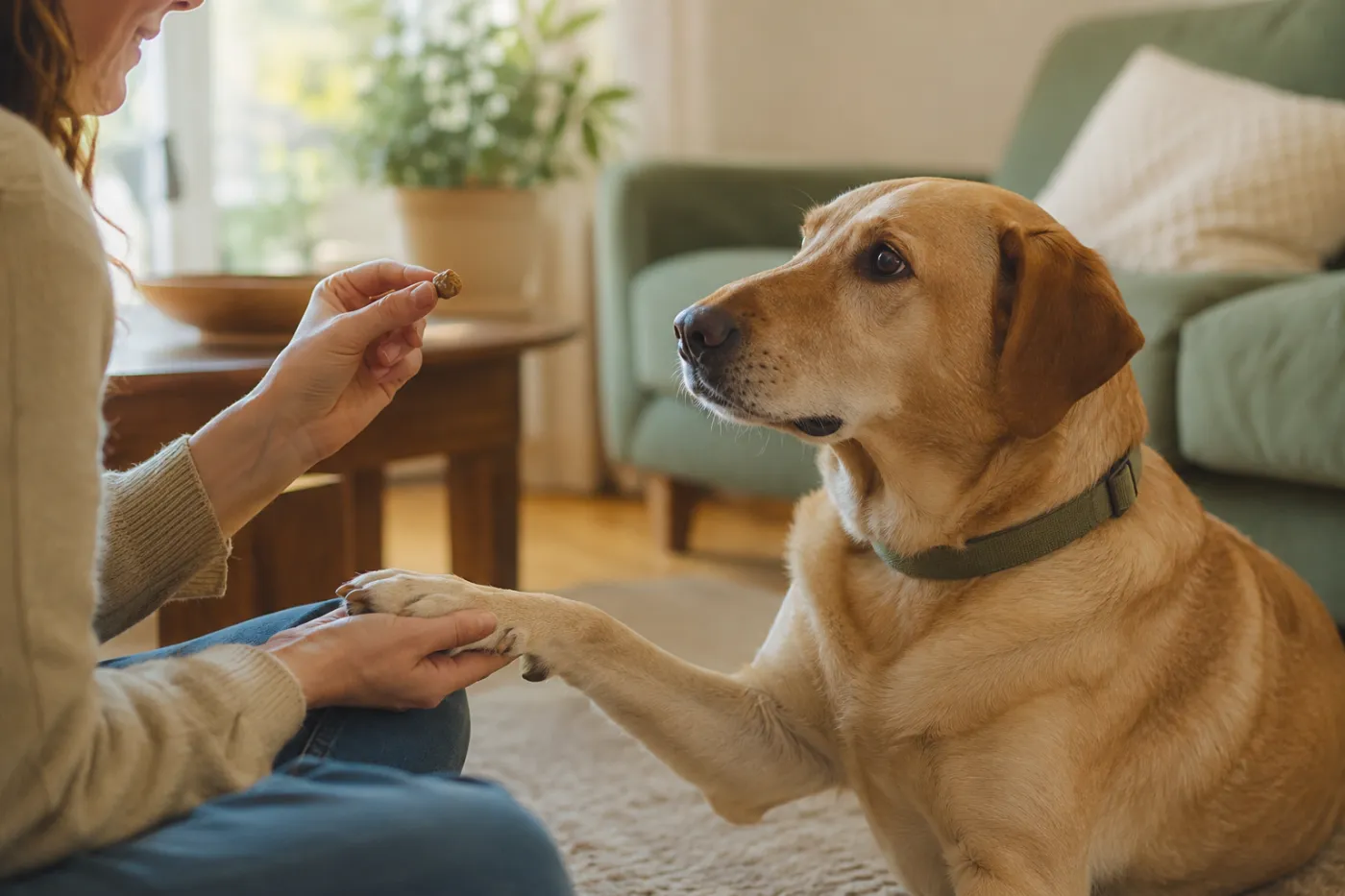 Handling
Teach Your Dog to Accept Gentle Handling
Help your dog accept gentle handling of paws, ears, mouth, and body — the base for all care.
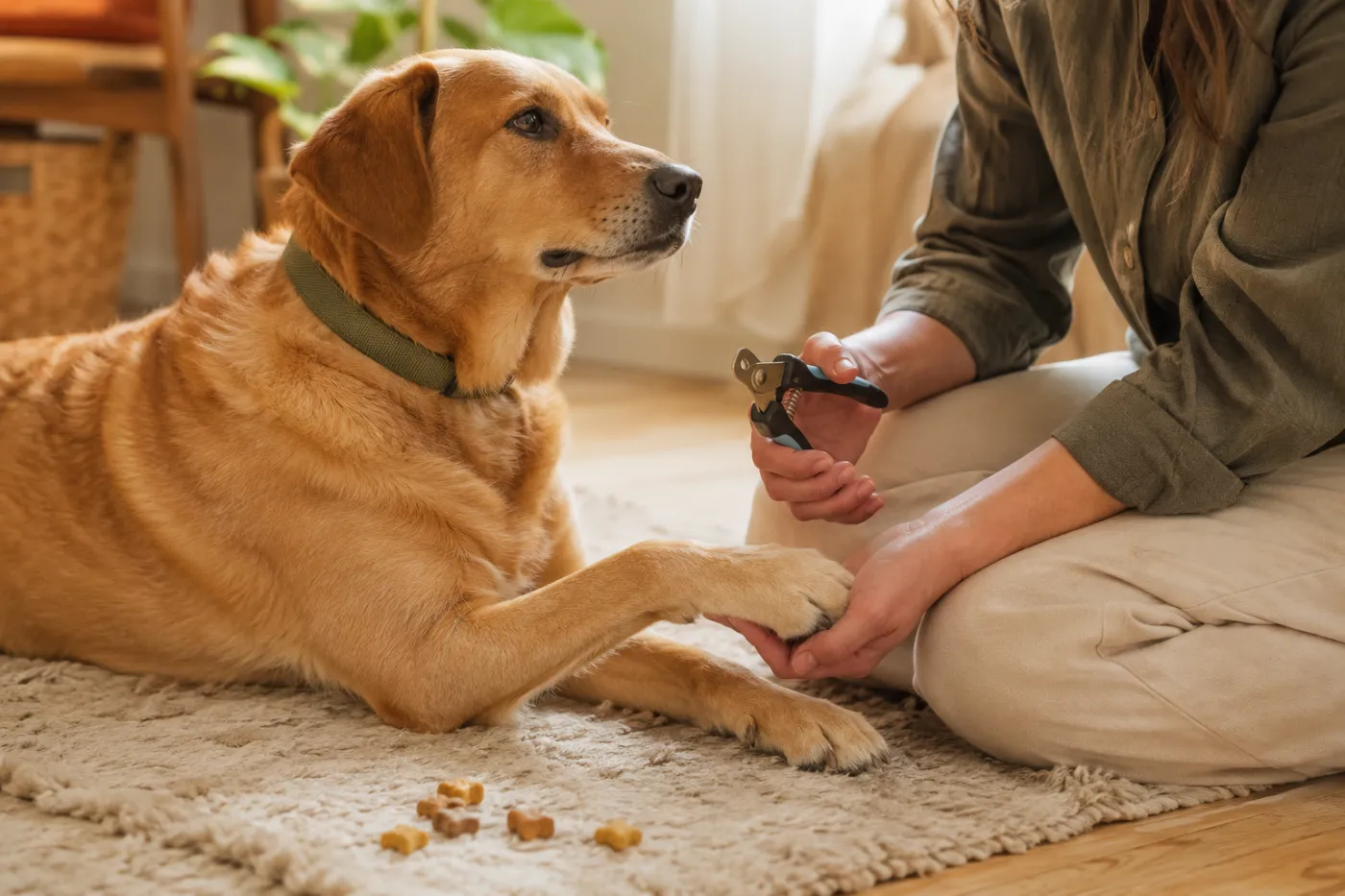 Nails
NailsGet Your Dog Used to Nail Trims
A step-by-step, force-free plan for nail trims, from paw handling to clippers or a grinder.
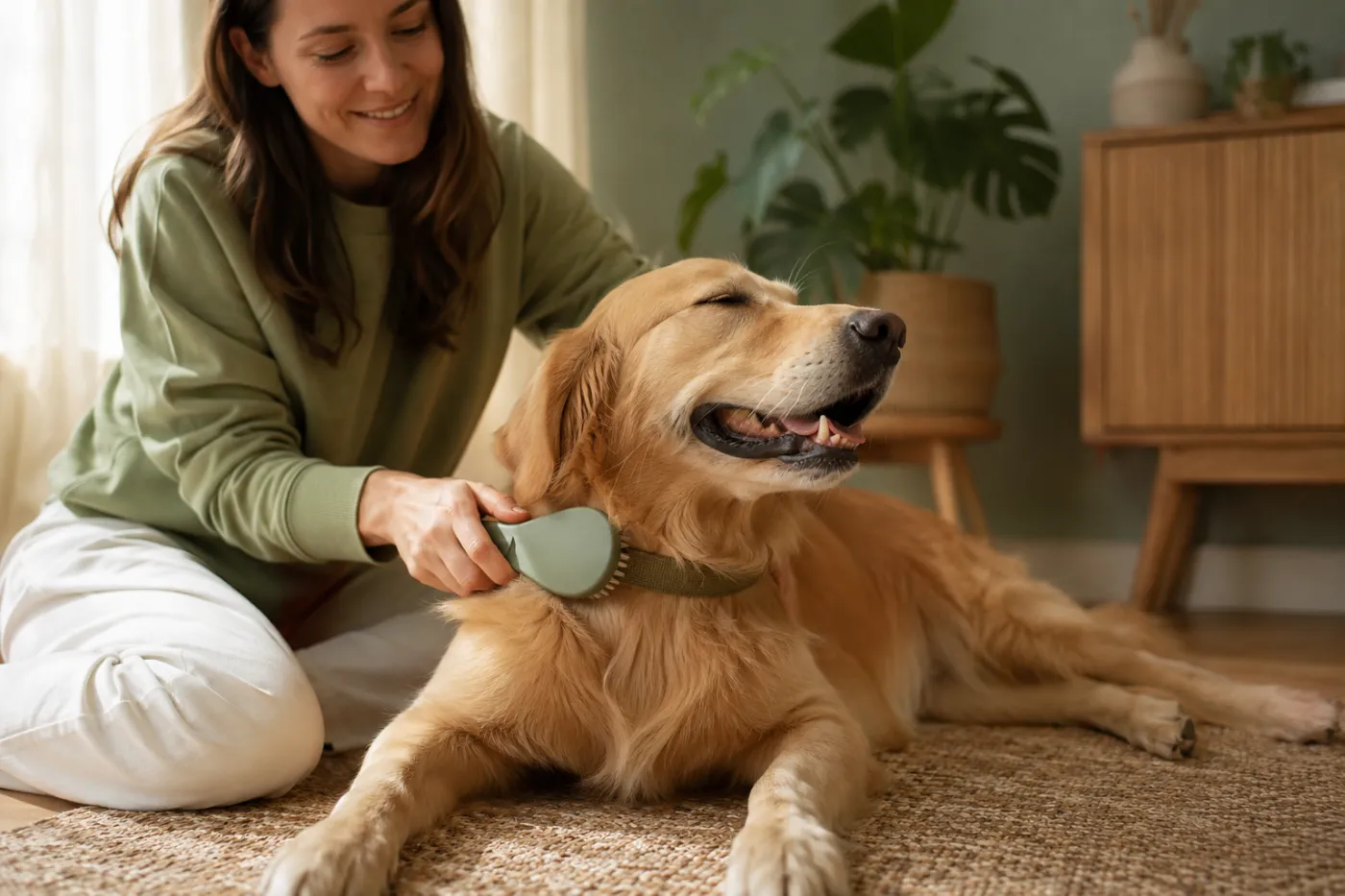 Grooming
Help Your Dog Enjoy Brushing & Grooming
Make brushing and grooming pleasant with short, reward-based sessions.
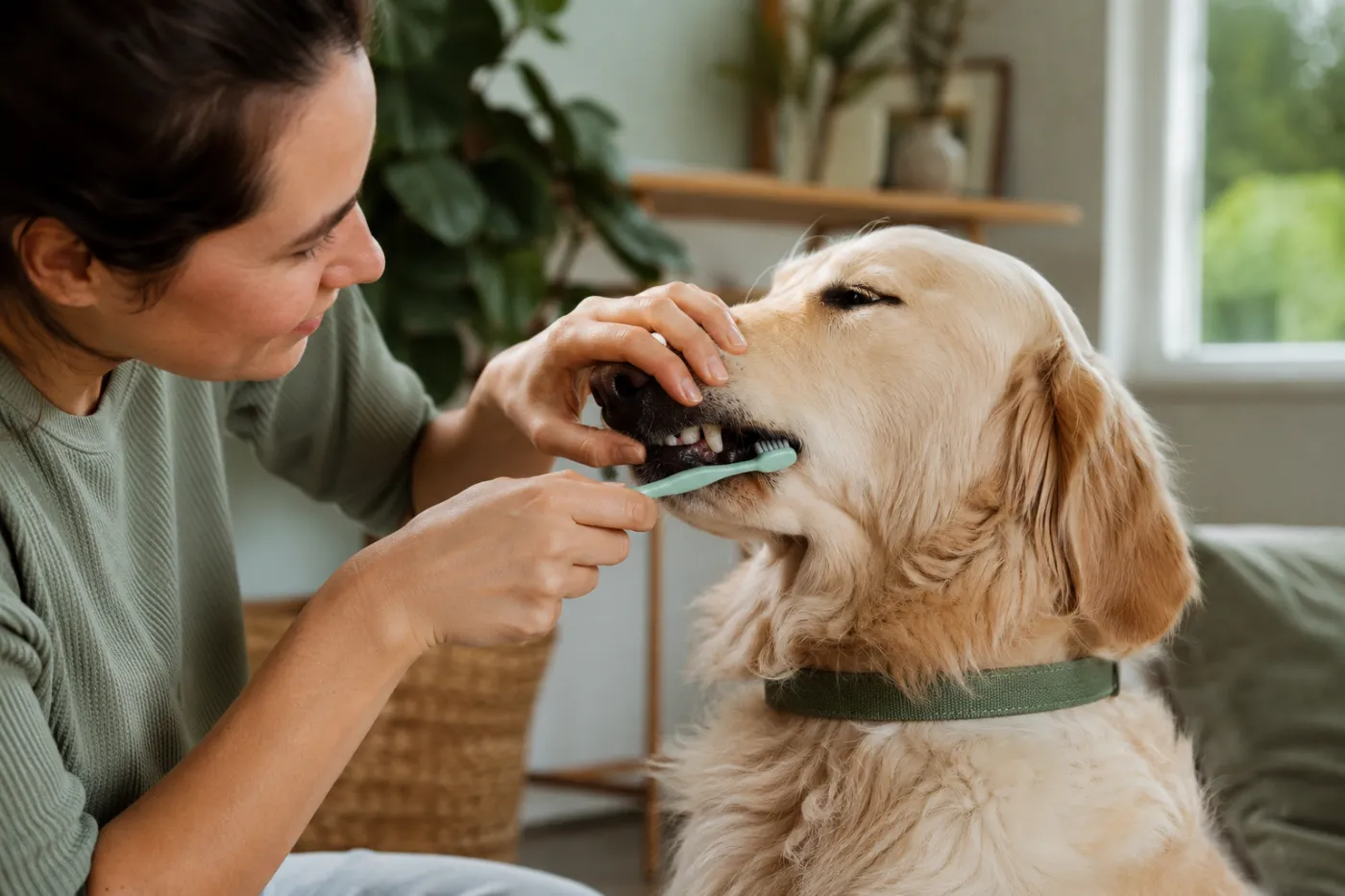 Dental
Get Your Dog Used to Tooth Brushing
Introduce tooth brushing gradually so daily dental care stays stress-free.
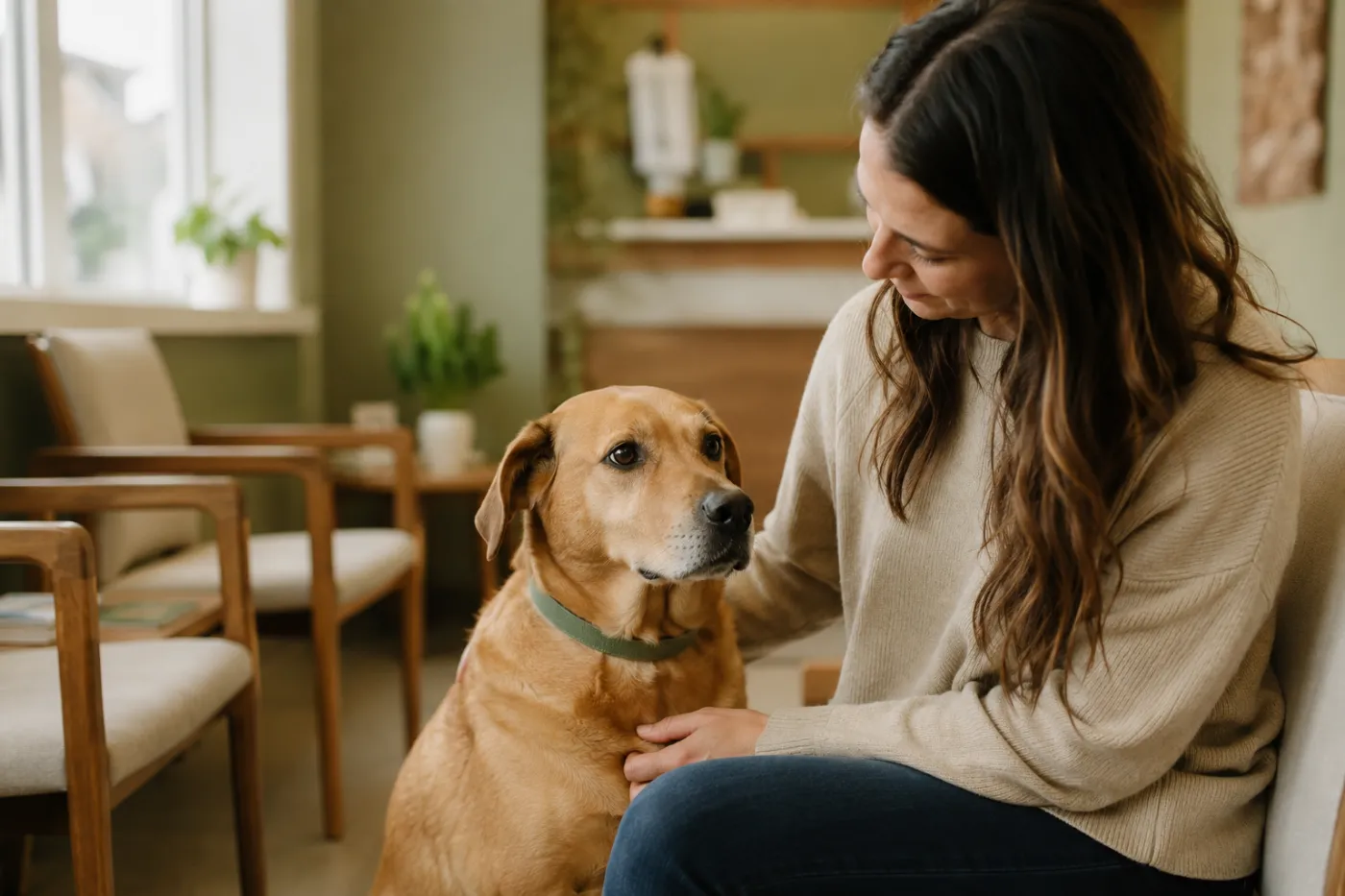 Vet visits
Make Vet Visits Less Stressful
Preparation and calm-handling practice that make trips to the vet less stressful.
Enrichment & exercise
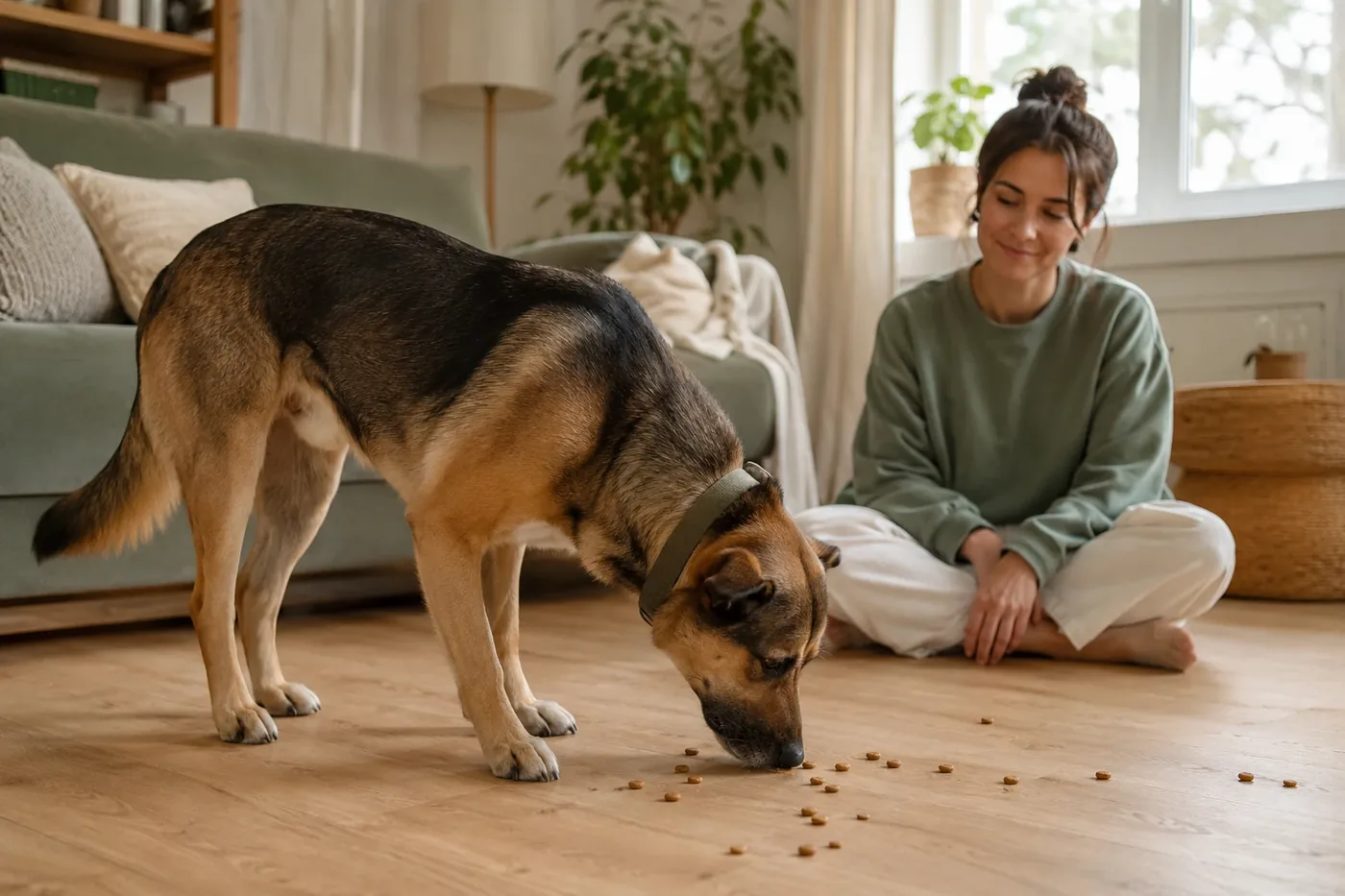 Enrichment
Dog Enrichment Basics
What enrichment really means — sniffing, foraging, licking, chewing — and how it supports calm behavior.
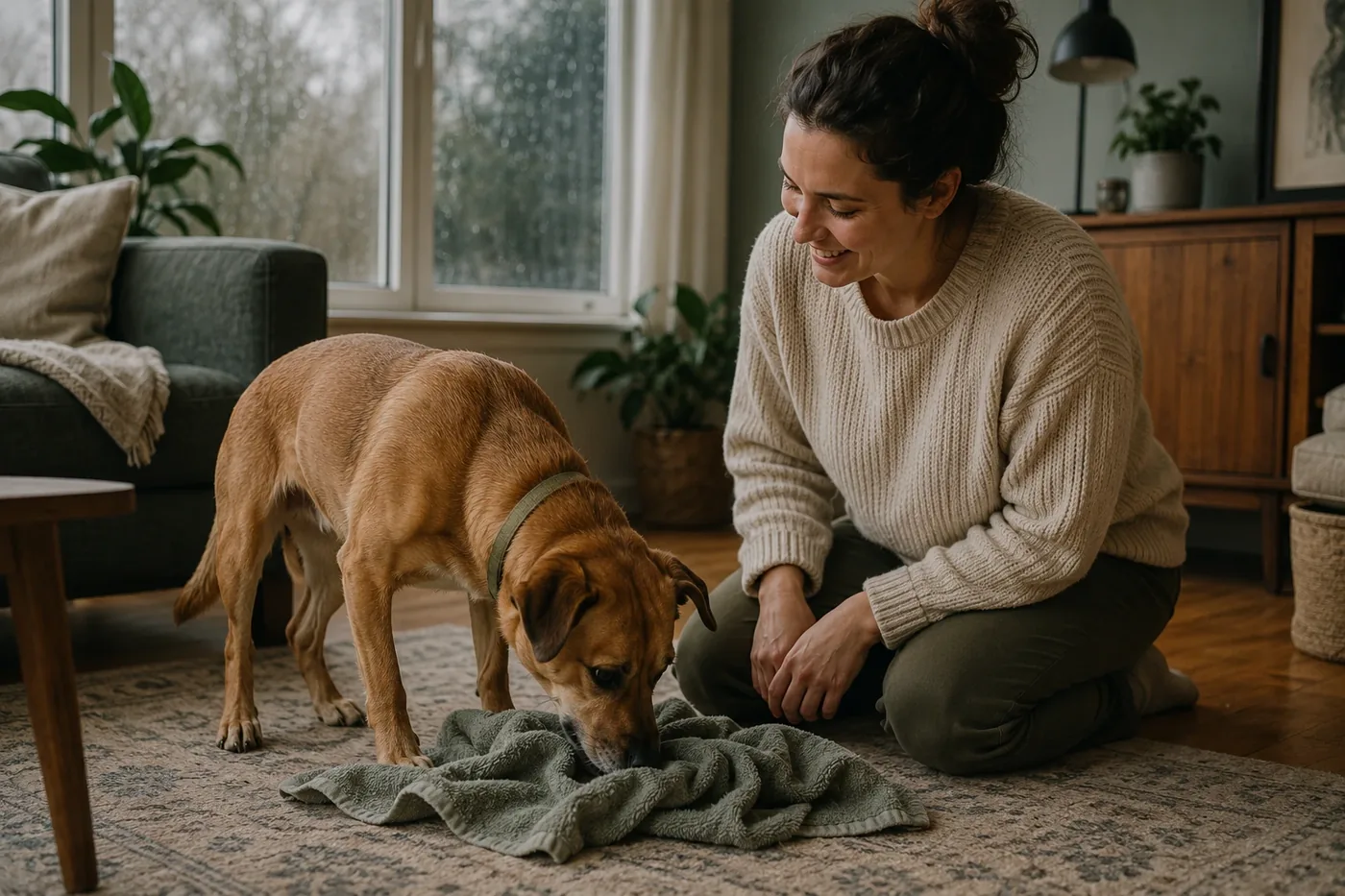 Exercise
Tire Out a Dog Without a Walk
Mental work that genuinely tires dogs — for rainy days, vet-advised rest days, and busy days.
 Games
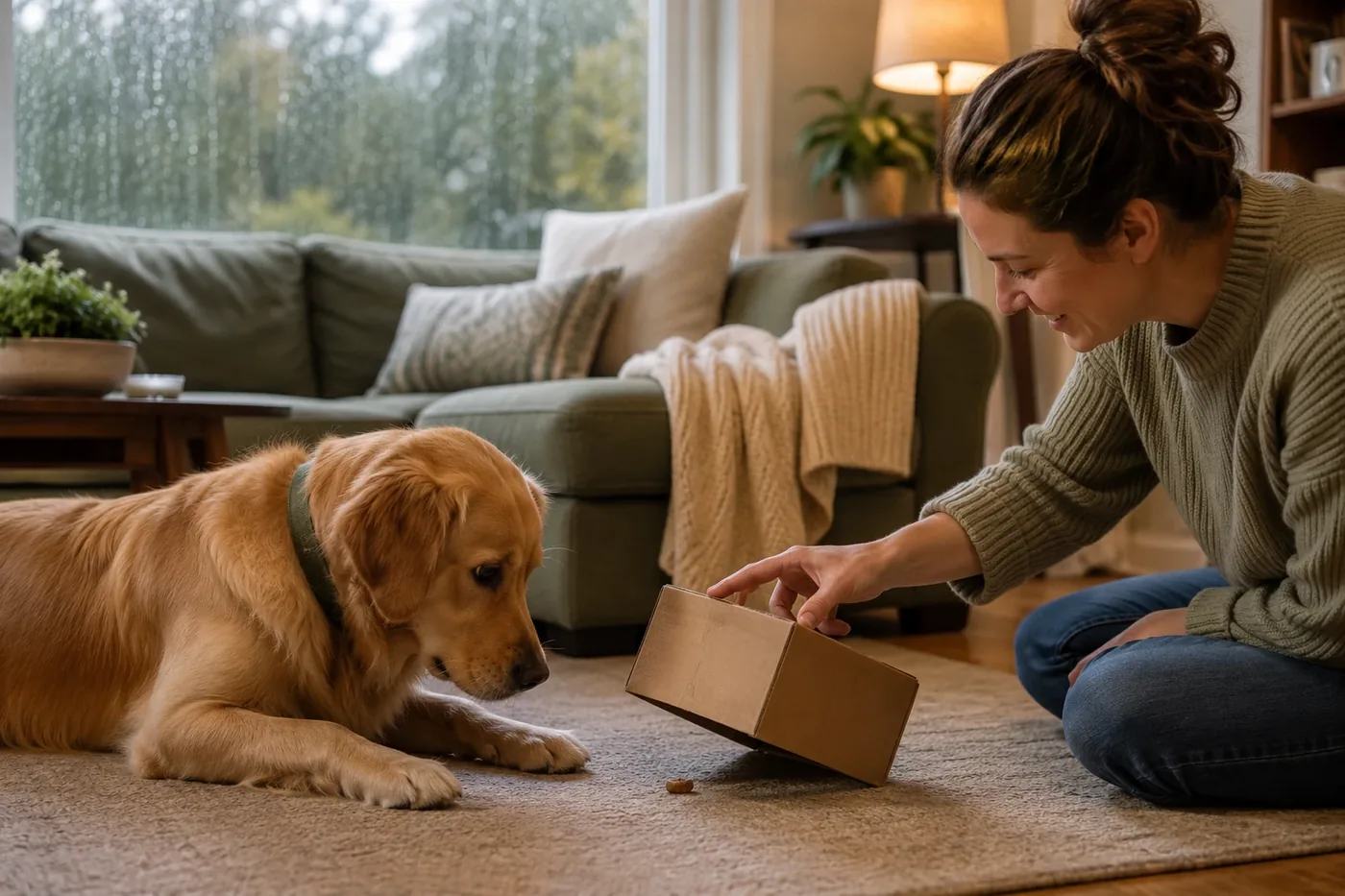
GamesRainy-Day Indoor Dog Games
Simple indoor games with things you already own: find-it, which-hand, hide-and-seek, and more.
 Foraging
DIY Snuffle Mat & Scatter Feeding
Turn part of mealtime into calm foraging — scatter feeding plus safe homemade snuffle options.
 Walks
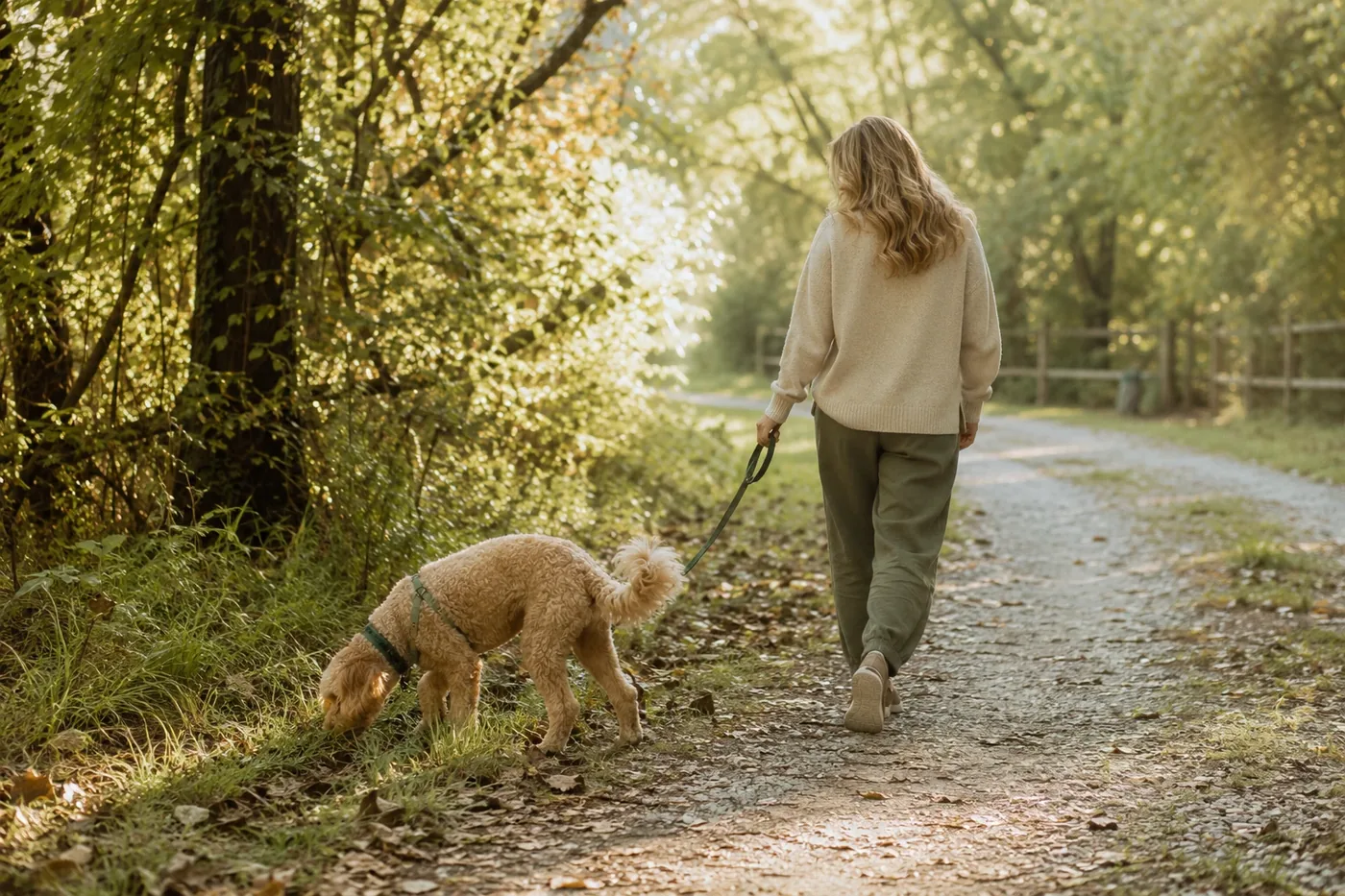
WalksSniffari Walks: Let Your Dog Sniff
Why sniffing matters, and how relaxed, dog-led walks help many dogs decompress.
 Puzzles
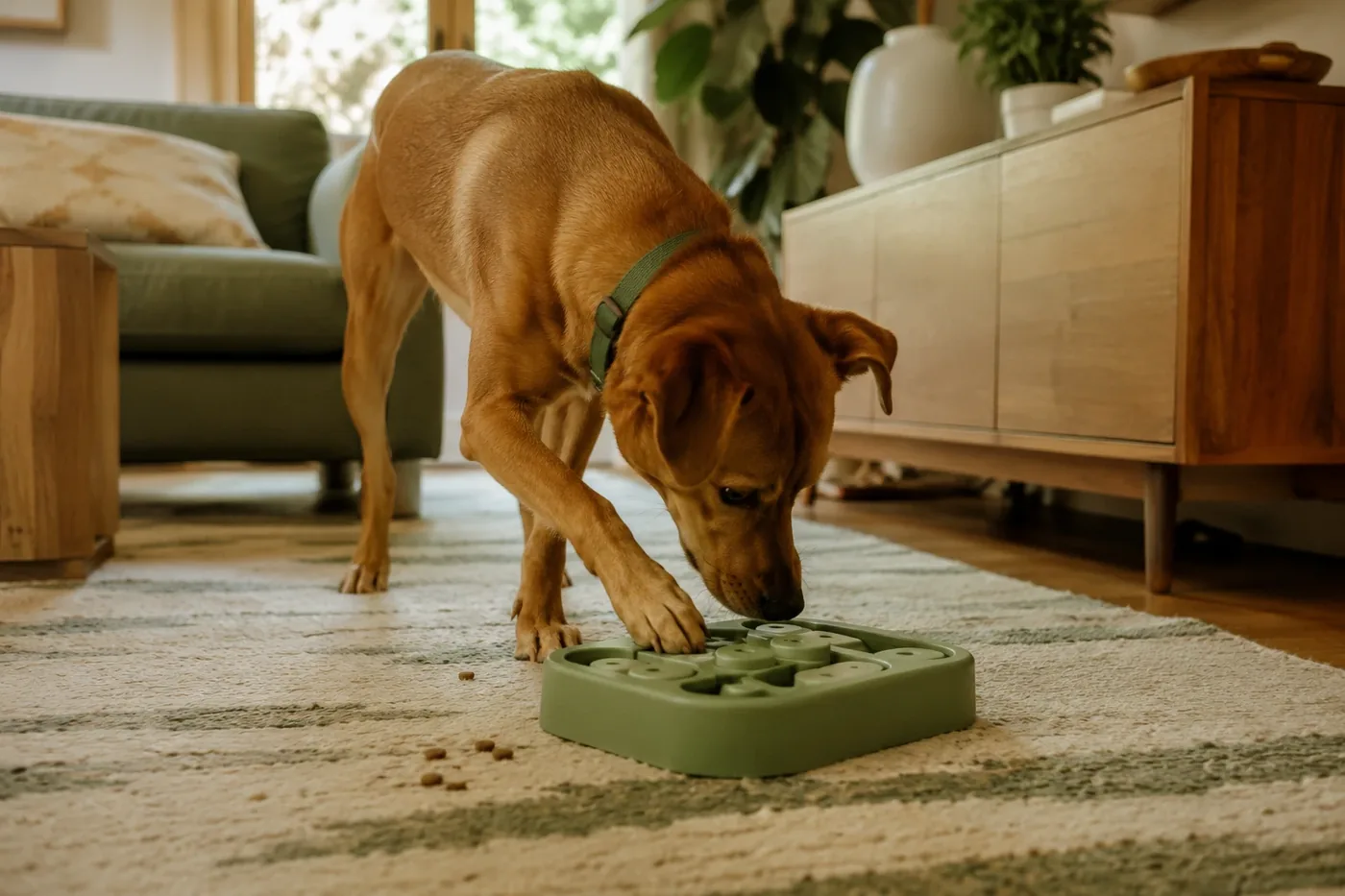
Introduce a Puzzle Feeder
Start easy, avoid frustration, and build up to feeding whole meals through food puzzles.
 Alone time
Bored Dog Home Alone? Safe Ideas
Boredom or distress? How to tell — plus conservative, safe enrichment for dogs who are okay alone.
 Lick mats
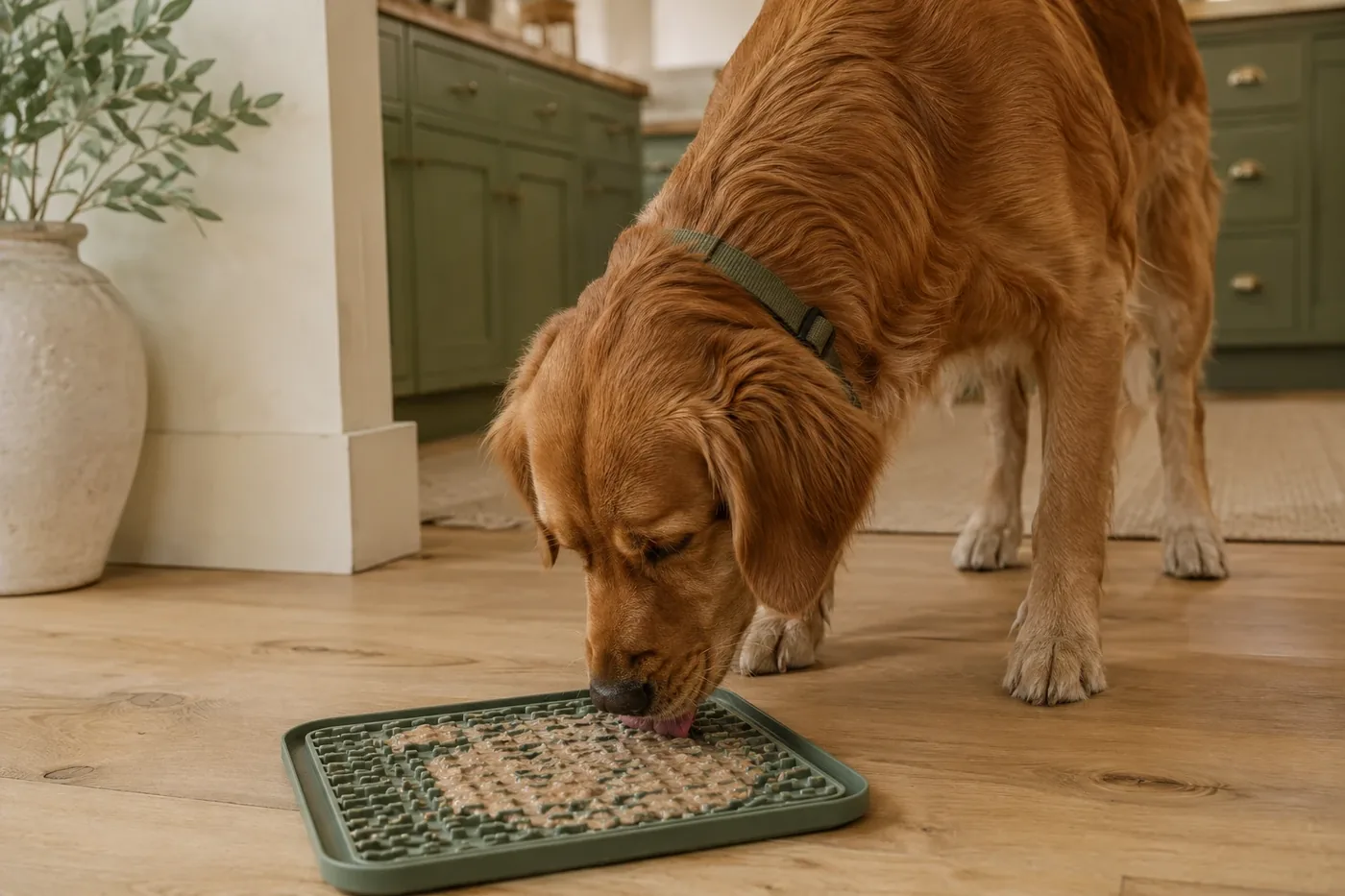
Lick Mats for Dogs
A calm, simple licking activity that helps many dogs settle — how to use one safely.
 Chewing
How to Choose Safe Chews
How to pick and use chews safely — size, supervision, and what to avoid.
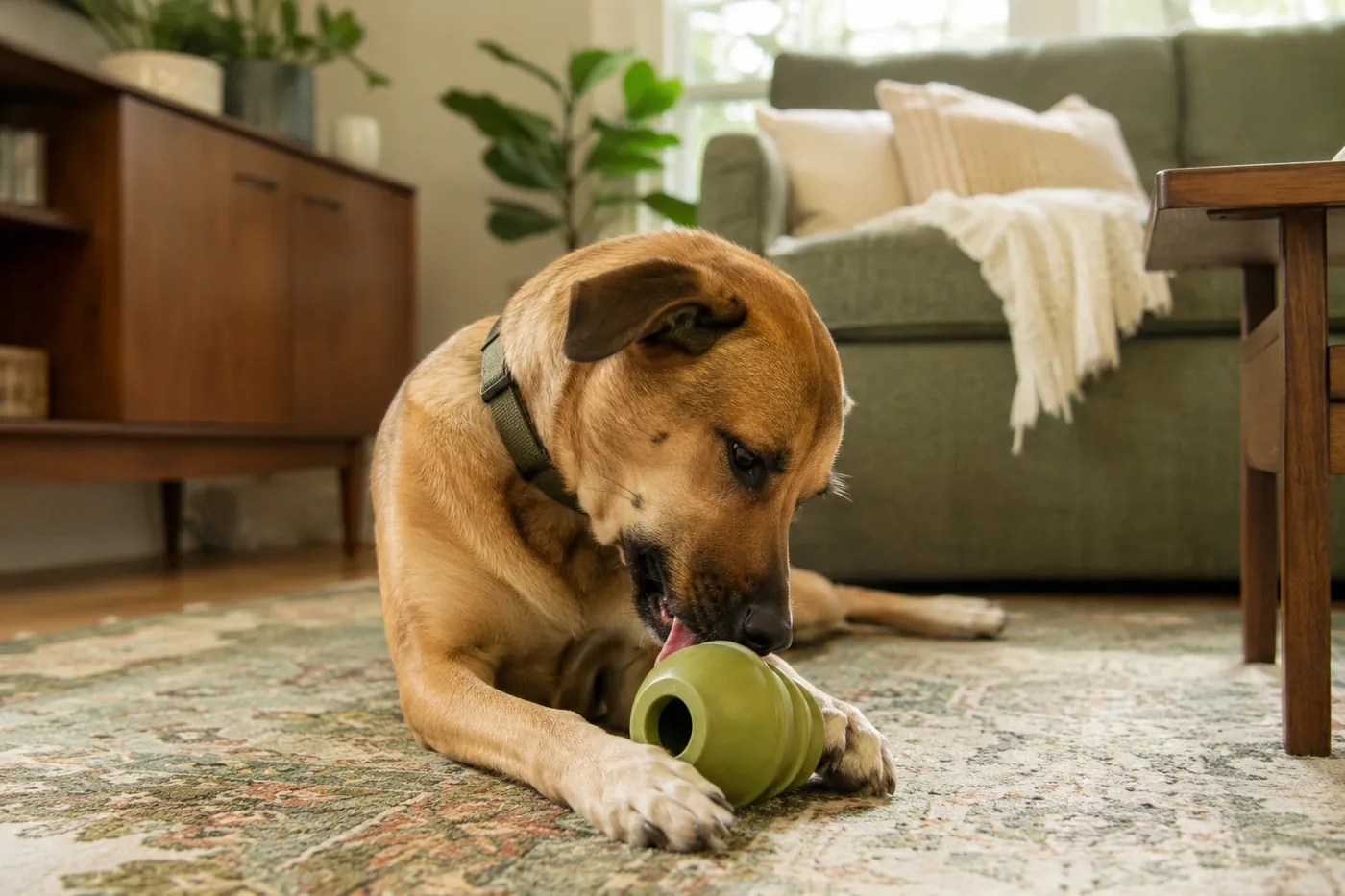 Food toys
Stuff & Freeze a Food Toy
Turn a hollow food toy into long-lasting calm enrichment — how to stuff and freeze it.
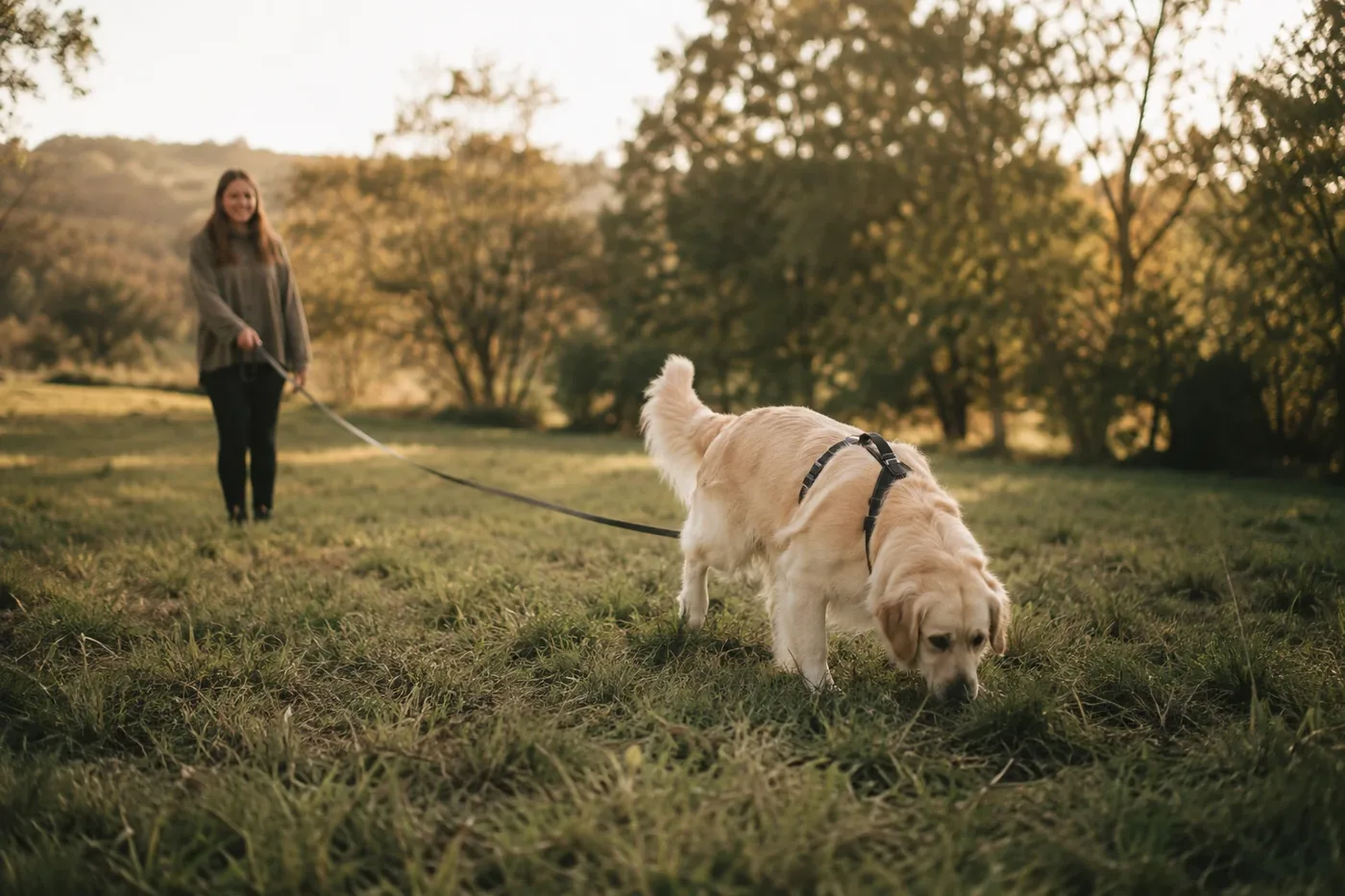 Long lines
Using a Long Line Safely
Give your dog freedom to sniff and practise recall — safely, on a harness.
A welfare-first promise
Some behavior needs more than an article.
If behavior involves pain, illness, sudden change, bite risk, aggression, severe fear, panic, separation-related distress, or danger, seek veterinary care or qualified positive-reinforcement behavior support.